Eli Lewis · elilewis2029@u.northwestern.edu · elilewisportfolio.info/work/portable-wii
Electronics · 2023
Portable Wii built by soldering to 0.1 mm traces
Micro-soldering, motherboard trimming and 3D-printed enclosure assembly, built to the open-source Ashida design
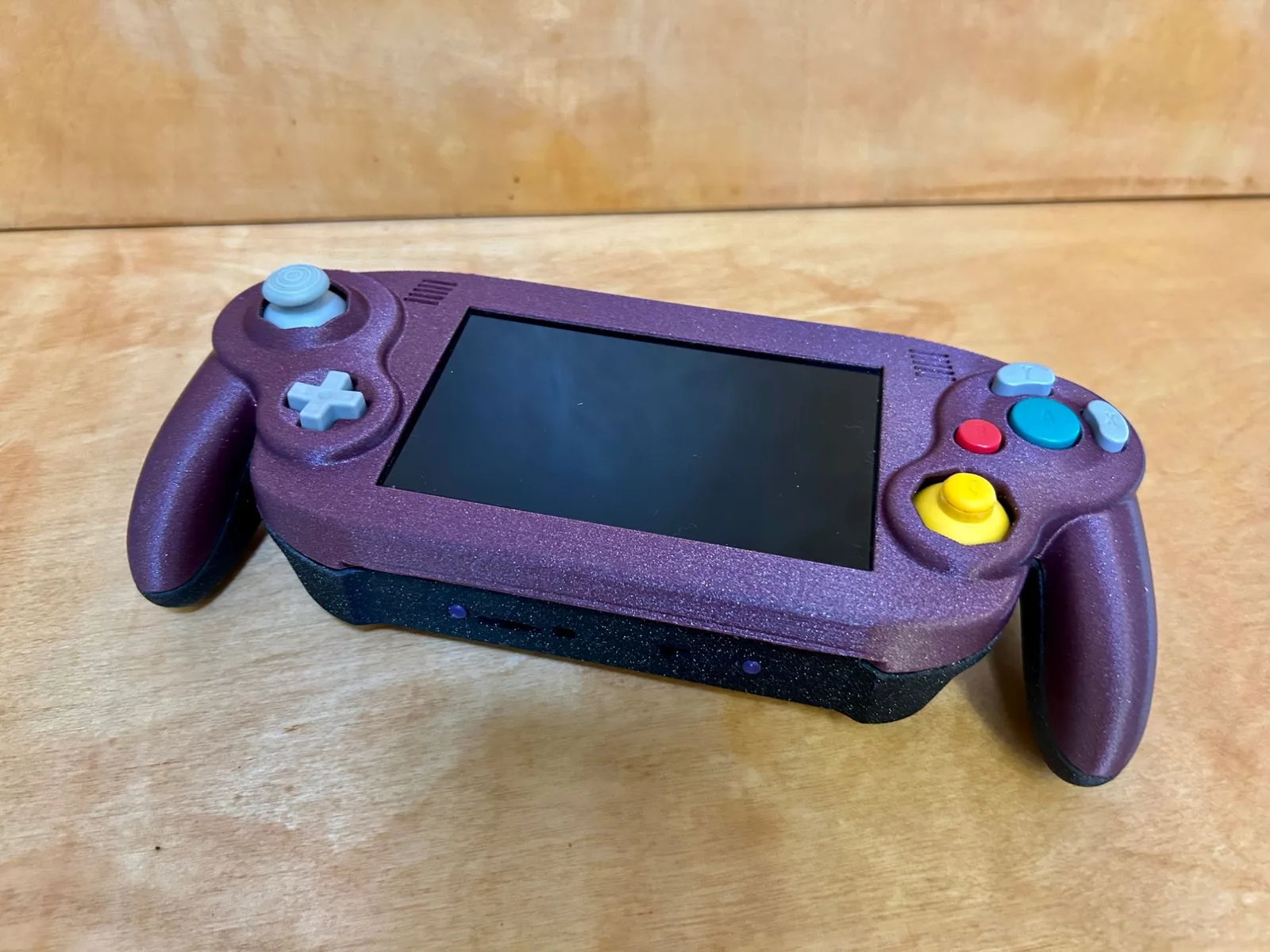
I turned a stock Nintendo Wii into a battery-powered handheld by cutting down its motherboard and rewiring it into a 3D-printed GameCube-style shell. It boots and plays games on its built-in screen; I did the console hack, board trim, soldering and assembly myself.
- Role
- SoloI was responsible for the whole build: software hack, board trim, soldering, wiring and final assembly.
- Duration
- about a year
- Tools
- soldering-iron, 3d-printer, kapton-tape
- Skills
- micro-soldering, electronics-assembly, hardware-modding, wire-routing
Goal & constraints
- Get a full Wii working as a self-contained handheld: screen, batteries and cooling fan in a hand-held shell
- Follow the documented Ashida design from the BitBuilt community after my own 2021 design stalled
Process
- Softmodded the Wii with custom firmware before opening it
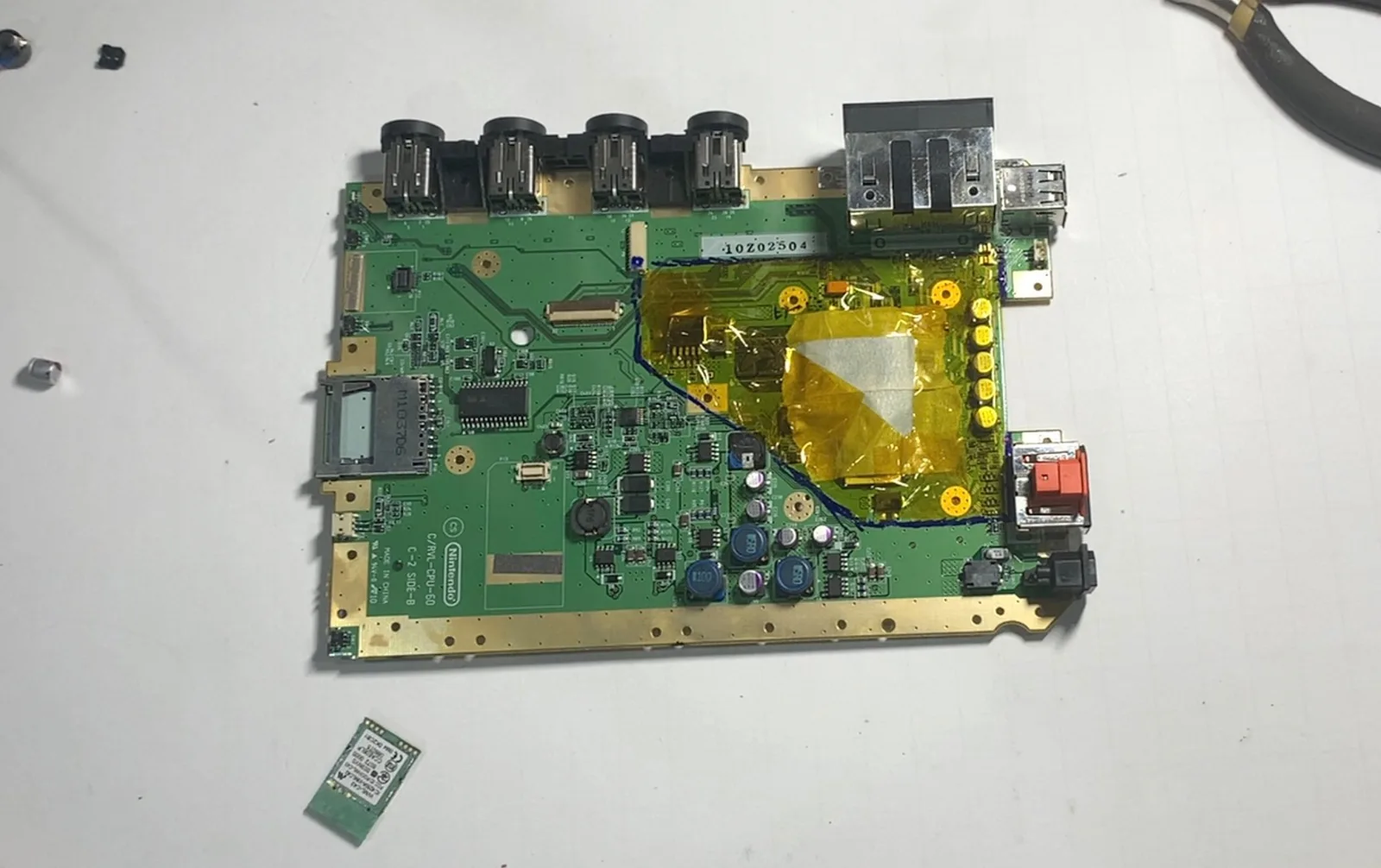
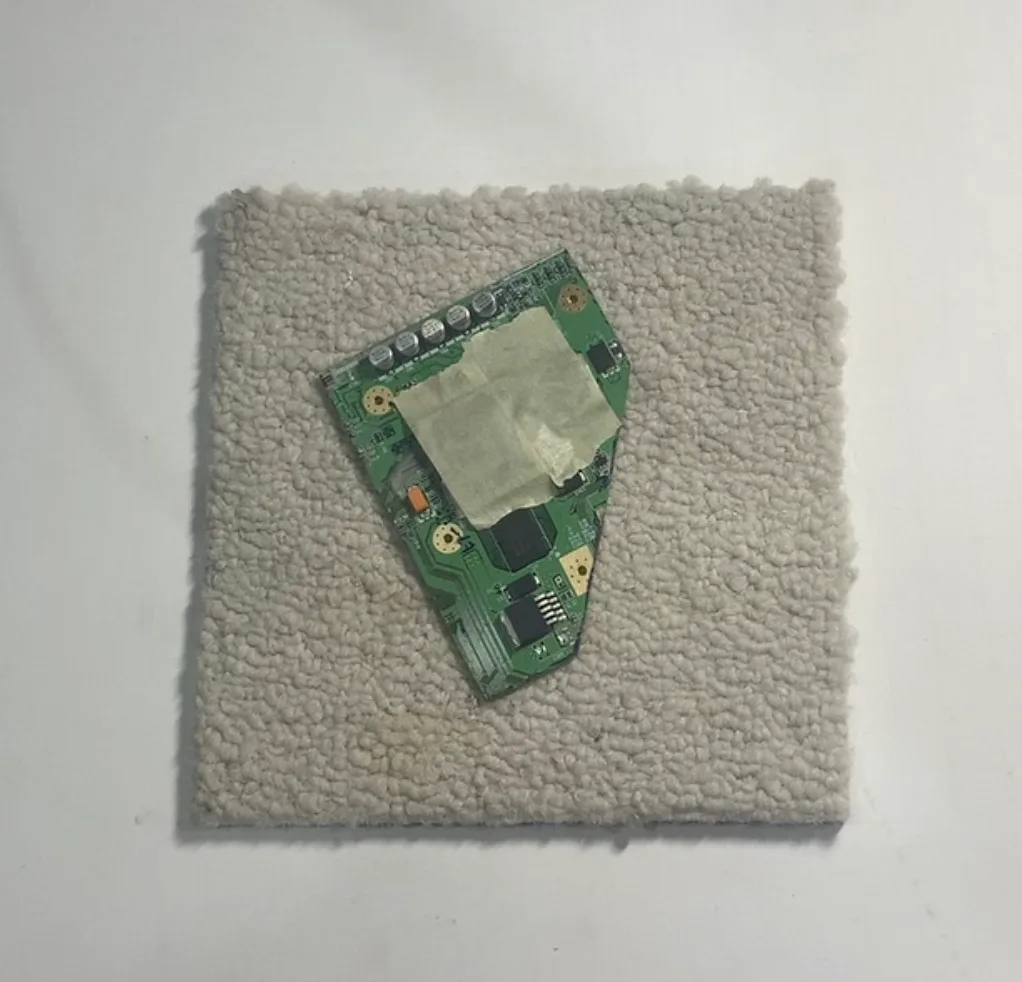
- Marked the trim line on the motherboard and masked the keep-out area with Kapton tape, then cut the board down to its core (photos 3–4)
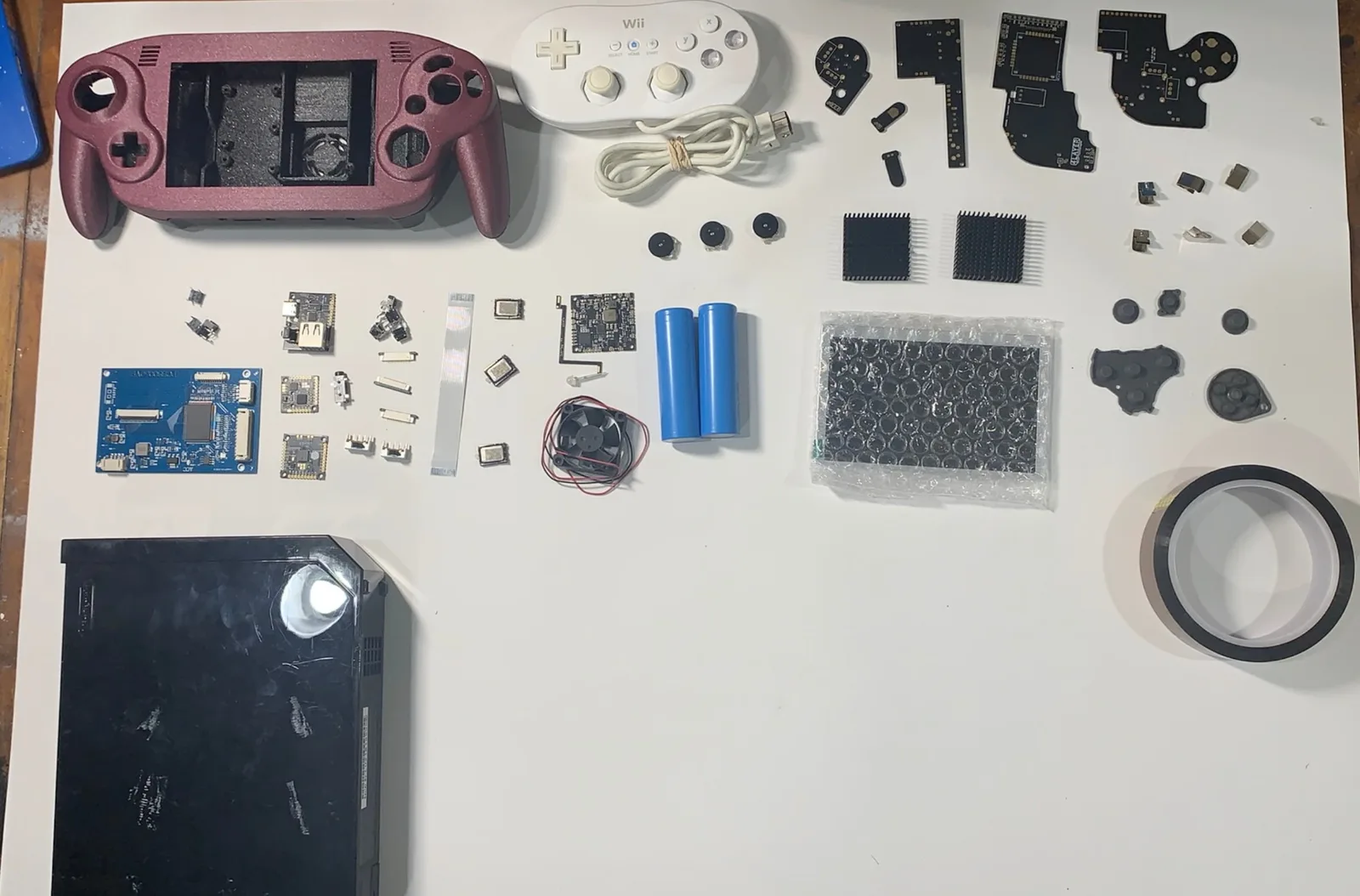
- Hand-soldered fine-gauge wires onto 0.1 mm traces on the trimmed board, linking it to BitBuilt's custom power, audio and controller boards (photo 2)
- Moved a GameCube controller's buttons and sticks into the 3D-printed shell, then wired in the screen, two 18650 cells and the fan
- Closed the shell without pinching wiring, then loaded games
Result
0.1 mm traces hand-soldered
What I’d change
Plan cleaner wire management from the start, and add Wi-Fi.
Printing this page gives a one-to-two page PDF.